
Paris’ Rive Gauche (Left Bank) is the historic stomping ground of artists, tastemakers and cultural icons. To this day, the neighborhood remains an artistic hub, home to the École des Beaux-Arts and a number of art galleries – including the Musée d'Orsay, the city's second-most-visited art museum, after the Louvre.
Home to France’s national collection of works from the impressionist, postimpressionist and art nouveau movements (1848 to 1914), the Musée d’Orsay is housed in the glorious former Gare d’Orsay train station (itself an art nouveau showpiece). Here, you’ll find a roll call of masters, with world-renowned works by Édouard Manet, Claude Monet, Paul Cézanne, Pierre-Auguste Renoir, Edgar Degas, Camille Pissarro, Vincent van Gogh and many more on glorious display.
To make the most of your visit to this popular museum, we’ve put together a guide with tips on tickets, the best time to visit and what to expect once you get there.
When should I go to the Musée d’Orsay?
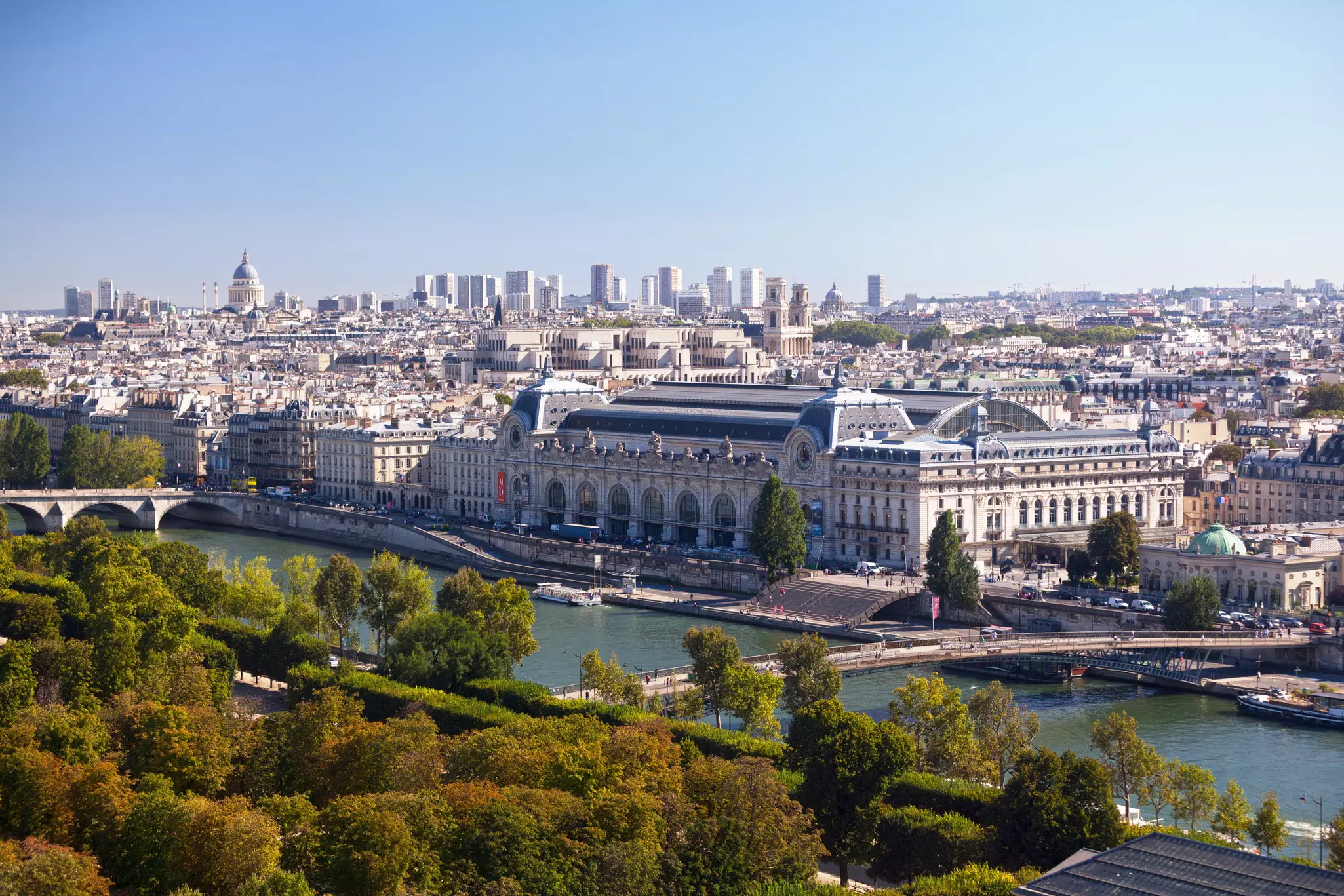
Exterior of the Musée d’Orsay. Gwengoat/Getty Images
As you might expect, the Musée d’Orsay is at its busiest in Paris' peak season, which is from spring until autumn (April to October). There are a number of measures designed to manage high visitor numbers during this time. Crowds are smaller in winter, between November and March.
According to our local sources, the museum is busier on Tuesdays and Sundays, and the best time to visit is around midday, when crowds thin out for a proper lunch break, as the French do.
The Musée d’Orsay is closed on Mondays. On Thursdays, the galleries stay open late, with ticket slots starting at 6pm. The last entry is at 9pm, and the museum closes at 9:45pm.
As well as the extraordinary permanent collection, visitors can enjoy temporary exhibitions, small concerts, film screenings, performances and cafe readings. Check the museum’s website to time your visit to one of these special events.
What's the best way to buy tickets for the Musée d’Orsay?
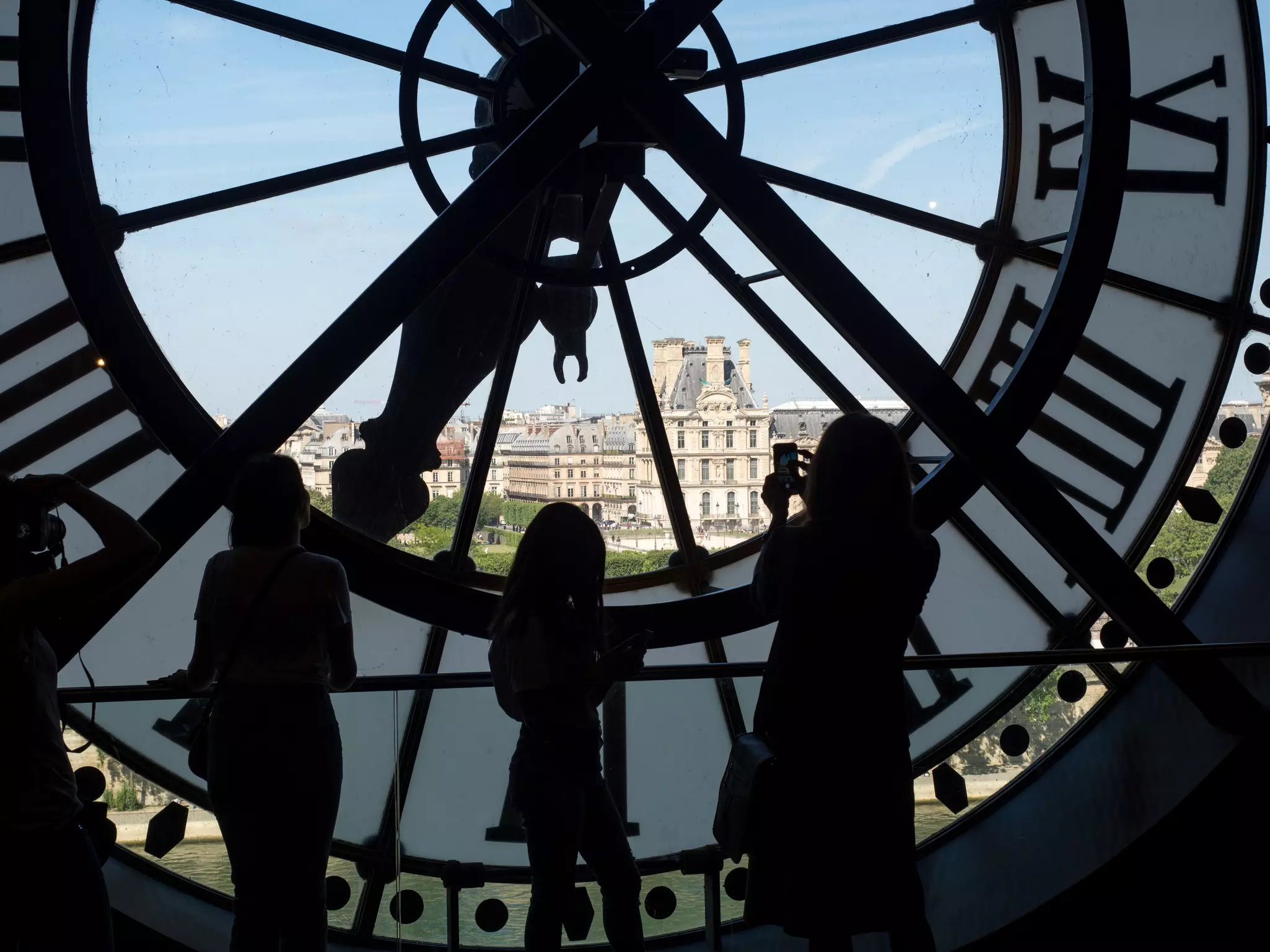
The iconic clock at Musée d’Orsay. ikmerc/Shutterstock
You will save time by pre-purchasing tickets online and heading to the right entrance. If you have purchased tickets in advance, head to the Quay Entrance. If you don’t have a ticket and want to wing it on the day, go to the Forecourt Entrance. Renovation work is underway in the public areas, so check online in advance to see the latest access information.
To save some euros, it is possible to get a ticket combined with entrance to the Musée Rodin. The Musée d’Orsay is also free on the first Sunday of the month – but you must book ahead for a specific time slot online.
There has been a proliferation of fake Musée d’Orsay ticket sites, so check that you are buying your tickets from the official site. The URL must include https and the extension .fr.
How much time should I spend at the Musée d’Orsay?
It’s almost impossible to view the entire collection in one day. Instead, pick one or two areas of interest and use these to direct your exploration. For a fee, audio guides provide commentary from the museum’s curators on over 300 works.
You can also pay to join one of the museum’s themed guided tours. Held daily in English, French and Italian, the 1-hour-and-30-minute tours follow themes such as "masterpieces," "animals" and "parties;" check the museum’s website for departure times. At busy times, book your tour slot in advance and allow plenty of time to get into the museum to meet up with the group.
What are the best things to see at the Musée d’Orsay?
Admire the architecture of the Musée d’Orsay
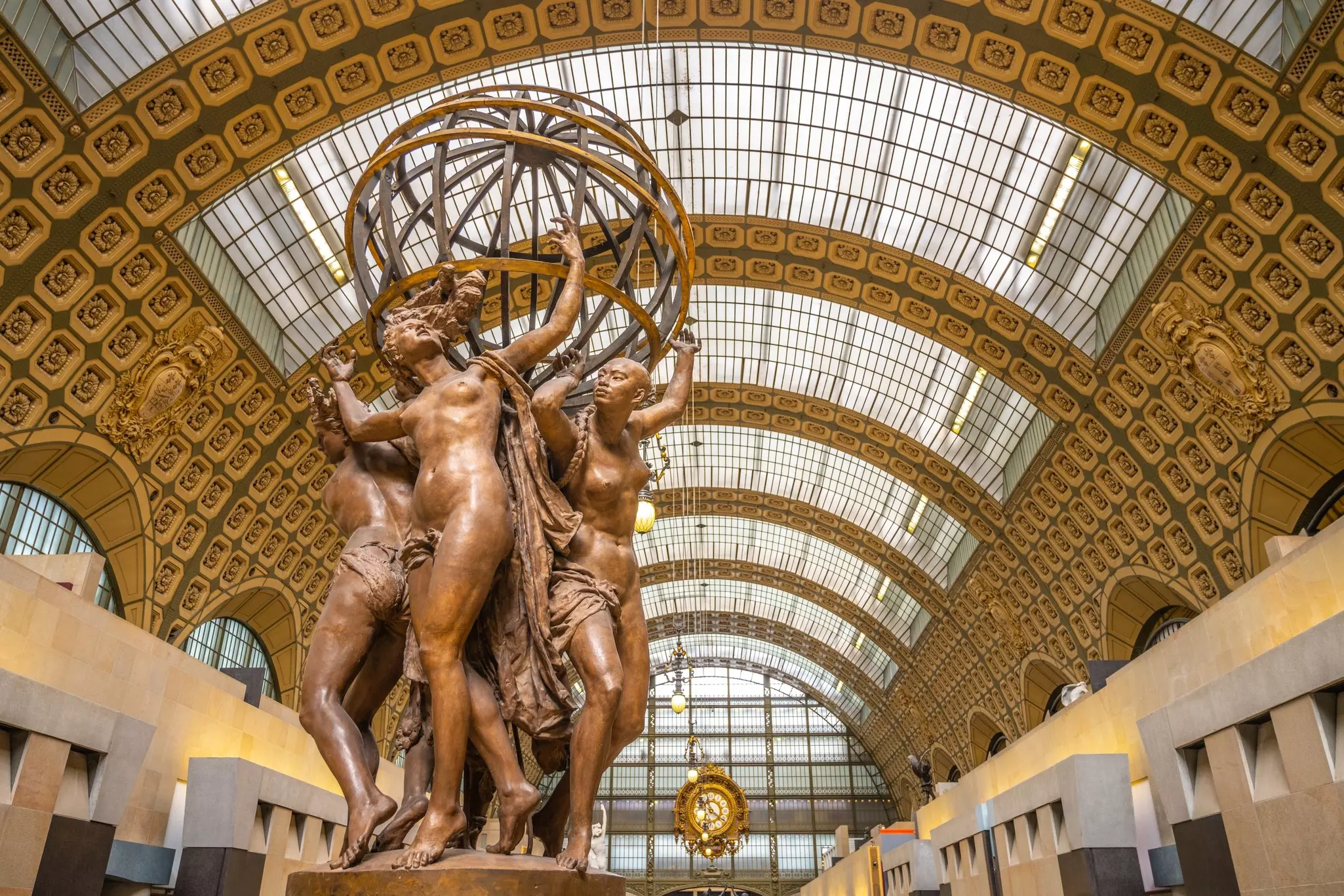
"The Four Parts of the World Holding the Celestial Sphere" by French sculptor Jean-Baptiste Carpeaux. Pyty/Shutterstock
This museum layout evokes the original railway station. Indeed, when authorities set out to transform the building into a museum, they made the decision to elevate the history of architecture to the status of the history of art, given the sheer significance of the encasing building. Accordingly, architectural drawings by the likes of Gustave Eiffel and Viollet-le-Duc hang alongside works by famous artists.
At the end of the ground floor is a space dedicated to the history of Paris’ urban development. Look below you, and you’ll notice an intricate scale model of the city as it stood in 1914.
Renovation works are running from 2026 through to summer 2028, which may impact some of the public areas.
Explore the many impressionist masterpieces
Most people visit the Musée d’Orsay for its outstanding collection of impressionist works, with the top floor of the museum largely dedicated to the movement – if you're short on time, head straight there. By tracing the galleries in a clockwise direction, you’ll get a fairly comprehensive overview of the development of the movement and its successors, from impressionism to postimpressionism to neo-impressionism. Here is where the well-known masterpieces, such as Van Gogh’s Starry Night over the Rhône and Degas’ sculpture La Petite Danseuse de Quatorze Ans, are exhibited alongside other fabled modern works.
Learn more about French cinema
Few know that from its start, the Musée d’Orsay has emphasized the history of cinema and cinematography – innovating an approach that considers film an art rather than a mere technique or entertainment. On the 5th floor, tucked away alongside the impressionist collection, is a gallery tracing the medium’s history and technical developments, with projections of short clips from pivotal films in the medium’s history. To complement this venture, the Musée d’Orsay often holds screenings in its auditorium of some of the most important works of cinema from the early 20th century. Check the official website for a schedule.
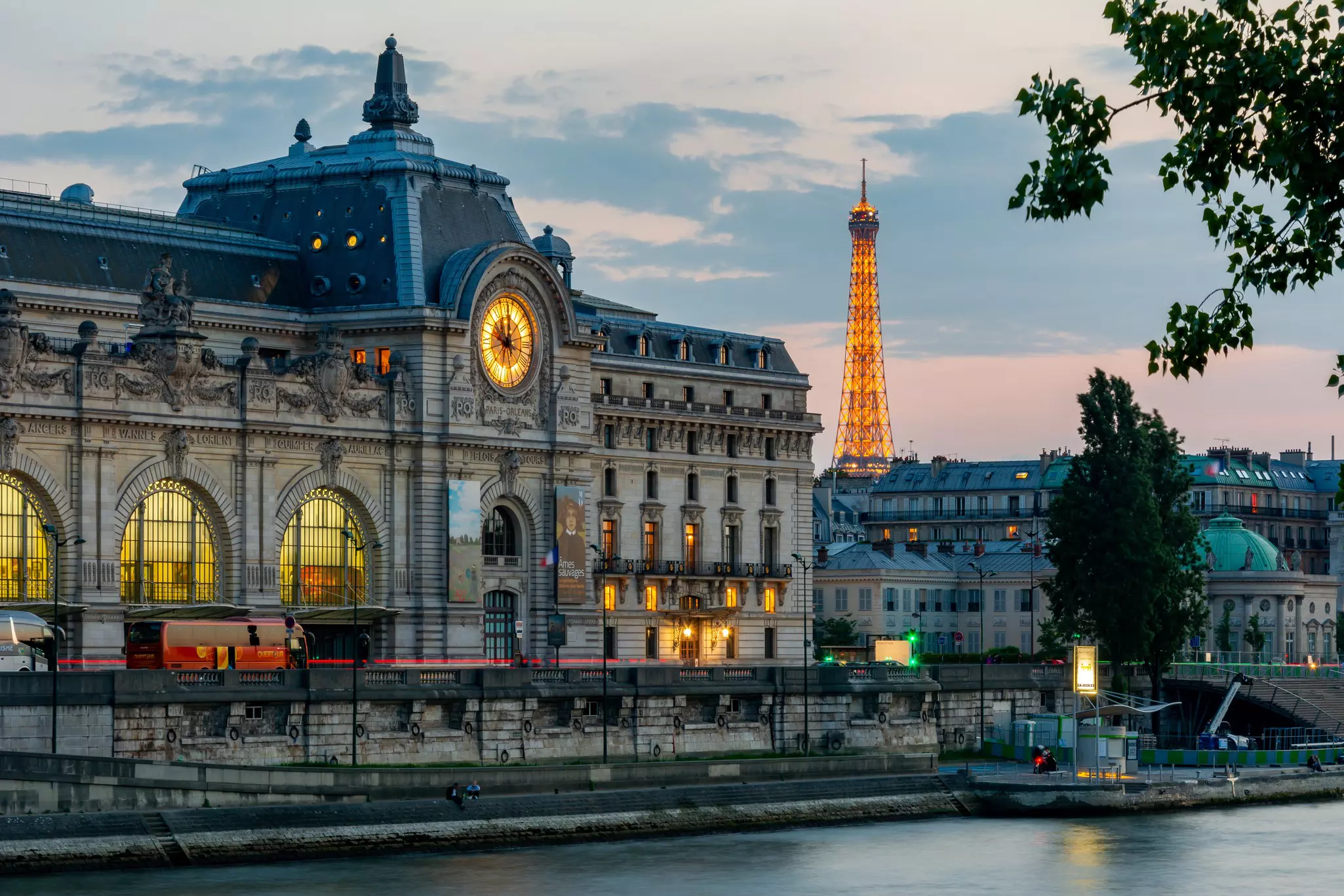
Musée d’Orsay at night. Vladislav Zolotov/Getty Images
Compare contemporary and historic art
Although the focus of the Musée d’Orsay is art from the period between 1848 and 1914, several times a year the museum invites major players on the contemporary art scene – past participants have included Jean-Philippe Delhomme, Marlene Dumas and Peter Doig – to curate exhibitions featuring their own works juxtaposed with selections from the permanent collection. By placing contemporary art in direct dialogue with historical masterpieces, these displays help viewers consider the works with a fresh perspective while emphasizing their enduring importance.
Don’t miss these masterpieces at the Musée d'Orsay
-
Éduoard Manet’s Le Déjeuner sur l’herbe
-
Vincent Van Gogh’s Starry Night Over the Rhône
-
Edgar Degas’ La Petite Danseuse de Quatorze Ans
Where can I eat or drink at the Musée d'Orsay?
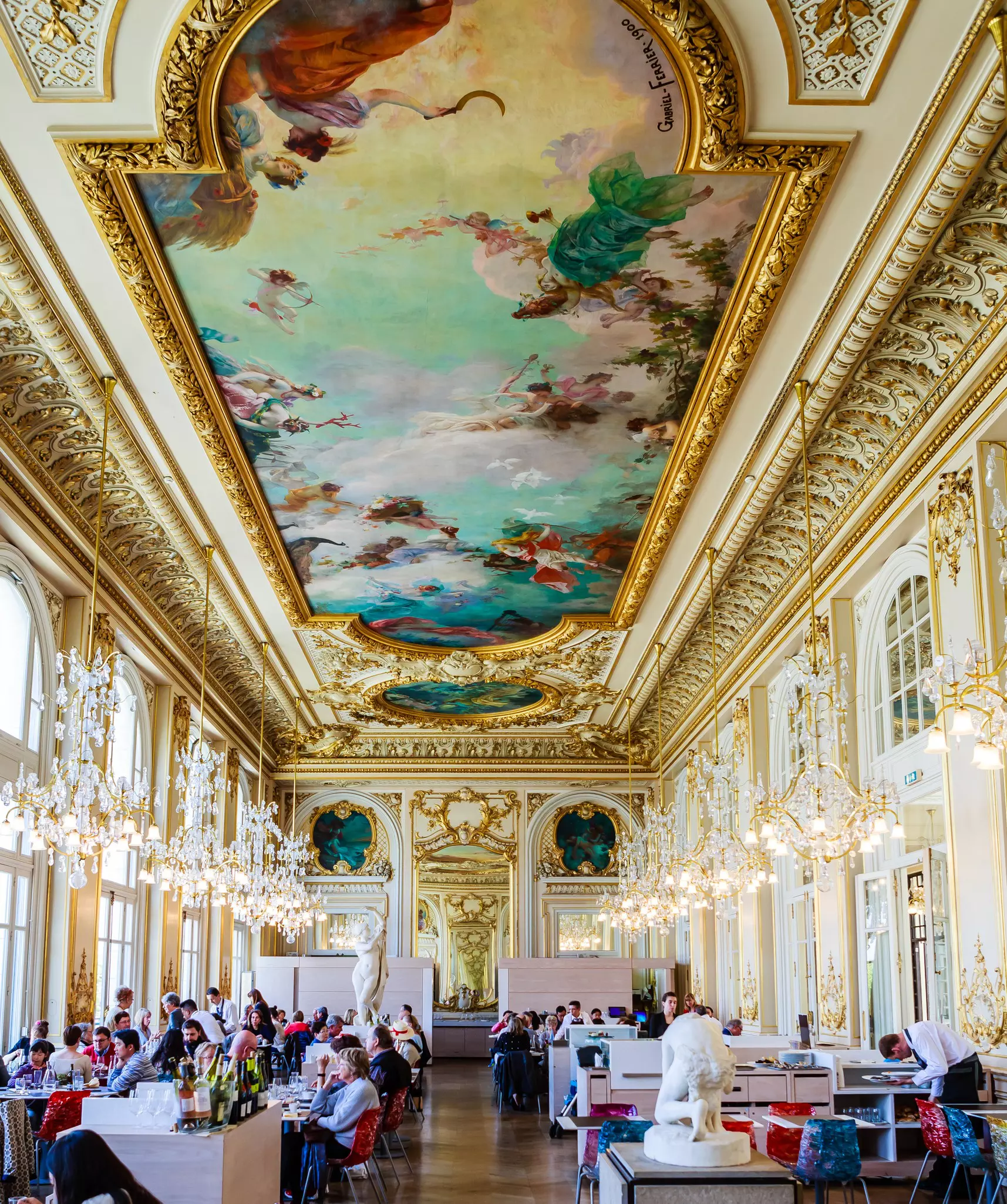
The Restaurant inside the Musée d’Orsay. nikolpetr/Shutterstock
You’ll find a host of dining options at the museum. Its restaurant, simply called “The Restaurant,” offers a seasonal menu to diners in a stunning gilded salon. Grab a bite or a cup of tea in Café Campana: the dining room has as its centerpiece the large clock visible at the top of the building.
You can also get lighter bites at one of two cafes and a kiosk (Le Kiosque du Parvis) that sells sandwiches, falafel and light refreshments. Break up your visit with a pause in the museum’s gilded tearoom, which was formerly the railway station’s dining room.
Where can I eat or drink near the Musée d'Orsay?
Beyond the museum, head to the arcade Beaupassage, where multiple refueling options range from Pierre Hermé’s tearoom-like cafe to the hipster coffee spot % Arabica in the courtyard.
To take your day out at the Musée d’Orsay to a luxe level, combine it with an evening at what many call the world’s best restaurant, Restaurant Guy Savoy. A temple to gastronomy, this culinary destination is ensconced in the neoclassical Monnaie de Paris and begins with a red-carpeted staircase. Need we say more?
Is the Musée d’Orsay child-friendly?
As well as offering free admission to under-18s, the Musée d’Orsay also offers kid-friendly audio guide options (aimed at the under-12s) and family-friendly self-guided tours. Large strollers need to be checked at the cloakroom, but museum-appropriate strollers are on offer so your little ones don’t have to traipse around for hours.
What is the best way to get to the Musée d’Orsay?
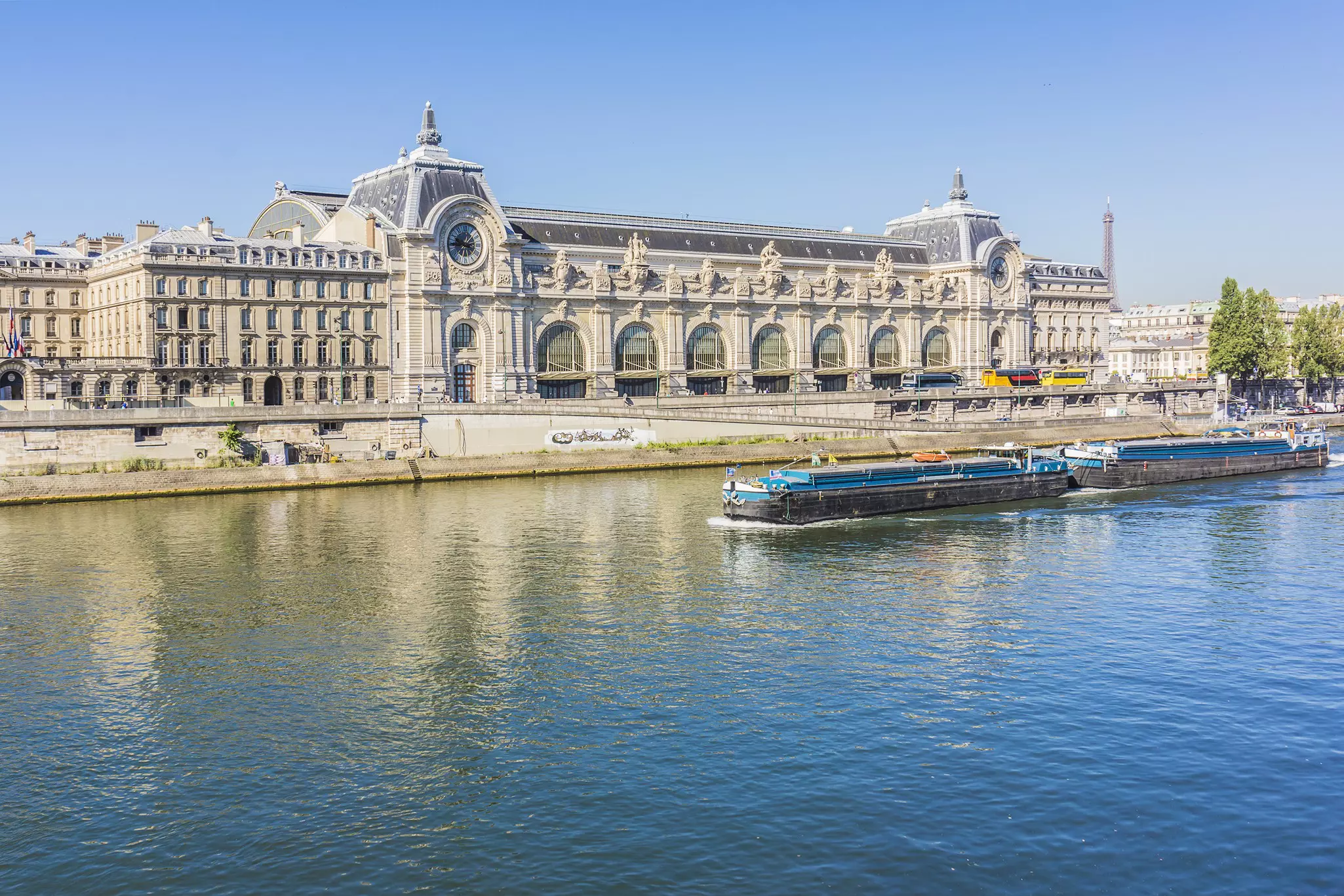
The Musée d’Orsay is on the Left Bank of the Seine. Kiev.Victor/Shutterstock
The museum is near the metro station Solférino on line 12; several buses also stop nearby. If you’re coming via RER, take line C to the Musée d'Orsay station, directly below the galleries. There’s also a Batobus stop outside. As everywhere in Paris, you can walk or cycle for the most sustainable way to get around town.
Is the Musée d’Orsay accessible?
All of the museum’s galleries are accessible by wheelchair; there are adapted toilets, access ramps, automatic doors and elevators, too. People with disabilities and one accompanying visitor are also given free admission to the museum. If you have mobility concerns, you can also borrow a wheelchair or a folded seat to make your visit more comfortable.
What is there to do nearby?
Feeling inspired? While you’re in the neighborhood, the nearby Magasin Sennelier on quai Voltaire is a famous art-supply store that dates back to 1887. Passionate about the chemistry of colors, Gustave Sennelier developed his own range of oil paints using pigments and binders sourced from his European travels. Artists such as Cézanne and Gauguin worked directly with Sennelier to create custom colors; later, the shop innovated with oil pastels for Pablo Picasso. To this day, the maison is a rendezvous point for artists who consider Sennelier to be la crème de la crème.
This article was adapted from Lonely Planet’s Paris guidebook, published in March 2026.