
















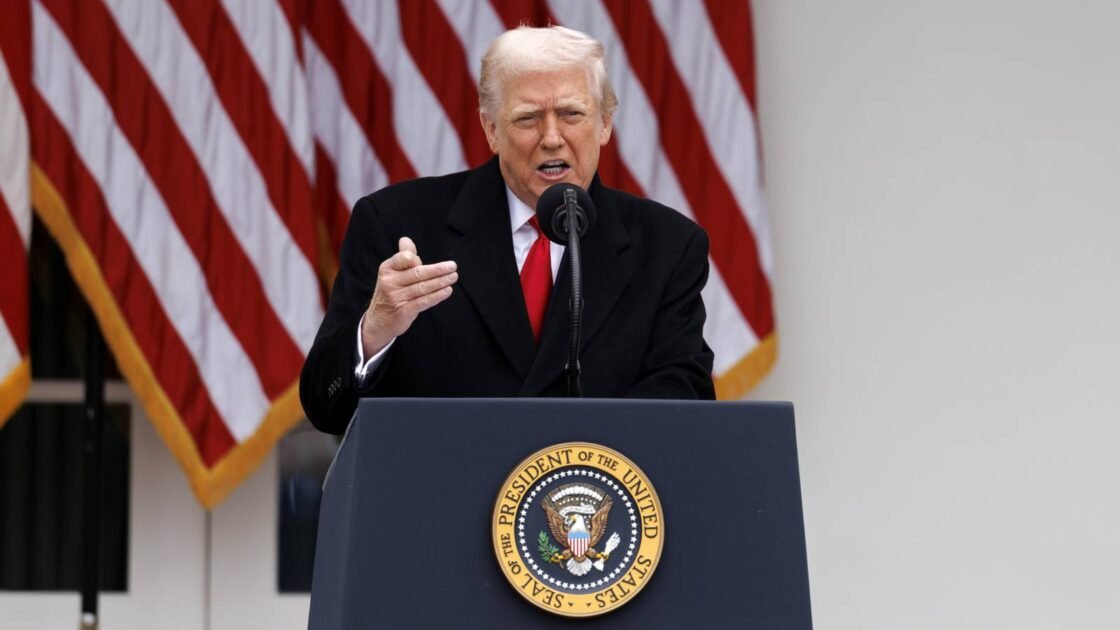

A member of Germany’s soccer federation executive committee suggested that the country should snub the World Cup this year in response to recent events and President Donald Trump's behavior.
Oke Göttlich, who leads Bundesliga club St. Pauli and serves as one of the federation’s vice presidents, explained how it's important to begin taking action, and it's time to talk about these matters. He stated in an interview with the Hamburger Morgenpost newspaper, "The time has come to seriously consider and discuss this."
Tensions have risen between the United States and Europe after Trump decided to pursue the acquisition of Greenland and threatened tariffs on European countries that opposed his proposal. The moves have prompted concerns even among America's allies about potentially destroying the country's relationship with NATO.
Göttlich further elaborated by comparing the current conflict at hand and the Olympic boycotts of the 1980s. He argued that the potential dangers of President Trump's plans might be even worse than the ones that were posed several decades ago. He stressed the need for a serious discussion on whether Germany should consider steering clear of the World Cup.
What were the justifications for the boycotts of the Olympic Games in the 1980s? By my reckoning the potential threat is greater now than it was then. We need to have this discussion.
Göttlich will likely receive a lot of pushback regarding any sort of boycott from both German federation president, Bernd Neuendorf, and FIFA chief Gianni Infantino. Meanwhile, France’s sports minister, Marina Ferrari, firmly stated that she is not planning on boycotting the World Cup over Trump's dispute with Greenland at this time.
At the moment we are speaking, there is no desire from the ministry to boycott this major, much-anticipated competition. That said, I am not prejudging what might happen
Hamburg’s St. Pauli has a history of blending political activism with sports. Göttlich doesn't believe that a potential boycott would negatively impact the players competing internationally, such as Jackson Irvine and Connor Metcalfe (Australia), or Joel Chima Fujita (Japan).
The life of a professional player is not worth more than the lives of countless people in various regions who are being directly or indirectly attacked or threatened by the World Cup host.
The United States, Canada, and Mexico will co-host the World Cup from June 11 to July 19. Aside from political issues, fans of the sport are upset about how expensive the tickets are and worried about travel restrictions implemented by the Trump administration preventing people from certain participating countries from attending.