

















Netflix’s Jay Kelly should have been right up my proverbial alley. I’ve lived in Los Angeles for the past 18 years working as an entertainment journalist, following the ins and outs of movies and those who make them. The “movies about movies” oeuvre was always niche, with movies like The Player and State and Main popping up every few years.
They were niche largely because they never really made much money, but that seemed to change as the calendar flipped to the 21st Century. Movies like Tropic Thunder, Birdman, La La Land, The Disaster Artist, The Fablemans, and many more found either critical or commercial success by turning the camera on the industry in one way or another.
The trend has even hopped mediums to the small screen with the heavily-lauded Apple TV Plus series The Studio, which landed a record-breaking 13 Emmy wins, the most for any show in a single season. Jay Kelly — from writer-director Noah Baumbach (Marriage Story) — is the latest entry in this “genre” of sorts.
While critically acclaimed, the ending of Jay Kelly only proves that Hollywood needs to stop making movies about itself.
Jay Kelly’s Supposed Duality Of The Movie Star Falters At The End
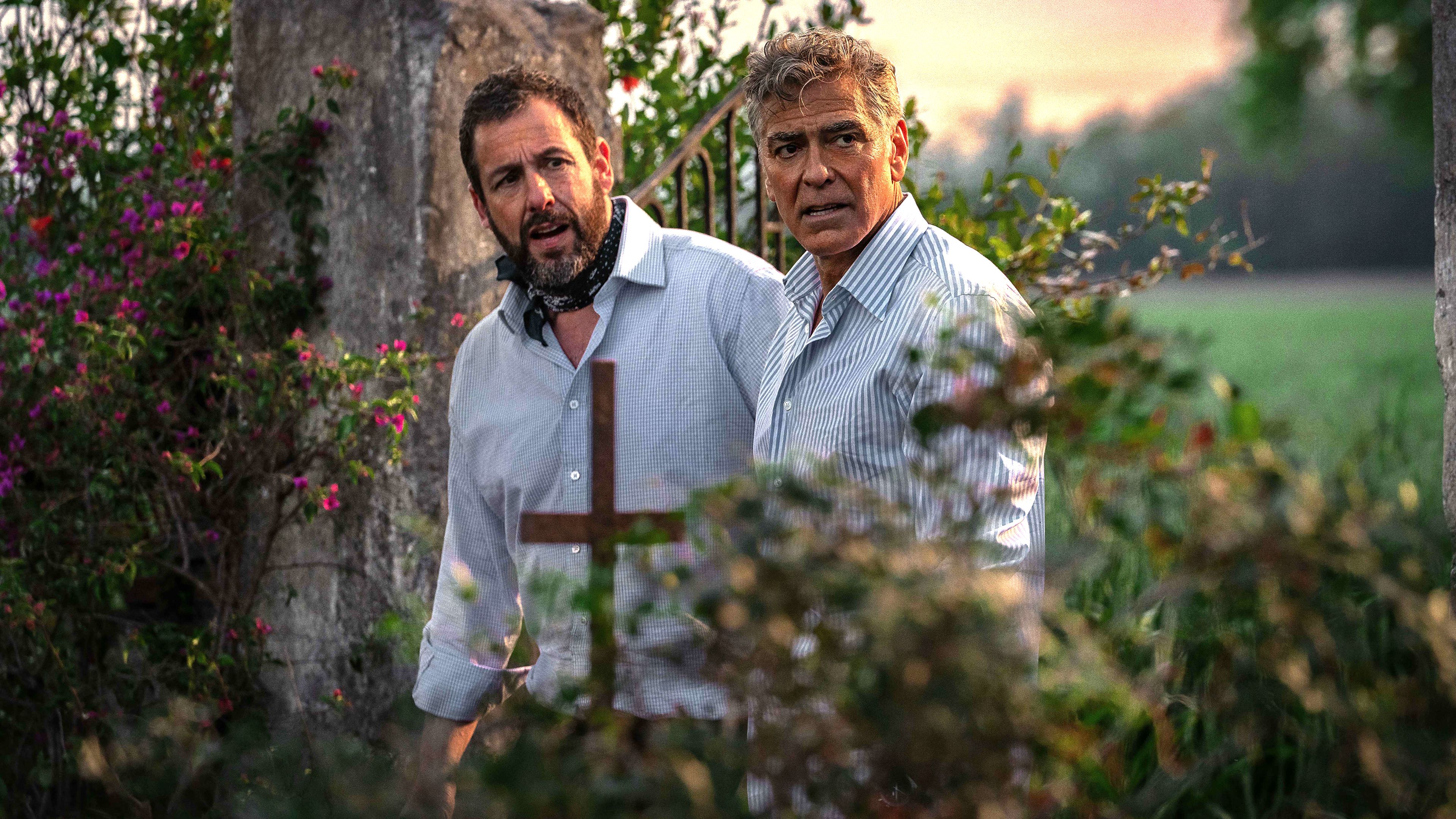
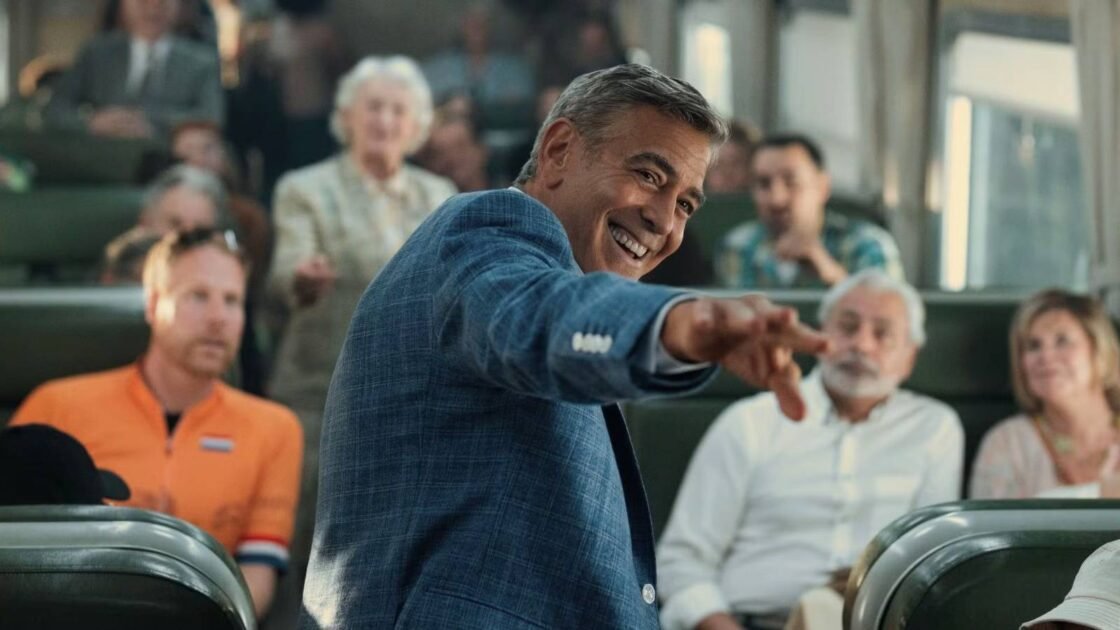
George Clooney stars as the title character, playing perhaps a fictionalized version of himself in the same way that his co-star Adam Sandler played a different version of himself in 2009’s Funny People. Both George Clooney and Jay Kelly are massive movie stars with a diverse array of hits across seemingly any genre, though there are still many differences.
Still, much like Clooney, Kelly is still very much in demand as an actor heading into his 60s. Plus, both Clooney and Kelly are from Kentucky, and they even show a montage of Clooney’s actual films during Kelly’s tribute at the end. The film tries to take viewers behind the curtain of celebrity life by juxtaposing two very different events.
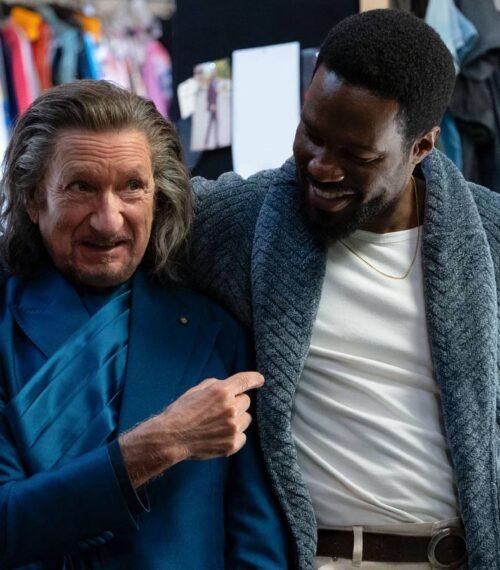
The first event is a chance encounter that turns into a random catch-up between old friends that suddenly turns into a violent street fight outside a bar. Jay goes to the funeral of Peter (Jim Broadbent), the director who gave him his big break, and runs into his old friend Tim (Billy Crudup), who he hadn’t seen in years.
They go to an old haunt for drinks and while they seem just as chummy as they were four decades earlier, after a few drinks Tim admits he hates Jay because he “stole” his life. Jay’s big break came when he accompanied Tim to an audition, only to read for the role himself and land it, launching his career.
What turned into a seemingly-civil catch-up turns violent when Tim swings on Jay and the tussle is captured on video by a bystander. That event looms over the rest of the film like a harbinger of doom, the supposed Sword of Damocles threatening to end Jay’s illustrious career.
A man suddenly decides to rob an old lady’s purse on said moving train, before pulling the emergency stop and running off with the loot… only for Jay to run him down and get her purse back, endearing him even further to these common folk.
He eventually gets to Tuscany, where he’s given a hero’s welcome, including the thing that’s been on his rider for years — a slice of cheesecake — despite him actually hating cheesecake — leading to a dinner before the tribute that serves as one of the film’s truly brilliant moments.
During the dinner, while Jay and his kinda-estranged father (Stacy Keach) hold court with their stories, the other patrons start seeing things on their phone, and acting a certain way. Immediately, I thought Tim had gone to the press, as Jay and his team were pondering if he would resort to that tactic throughout the trip.
Throughout this trip, there are flashbacks to several key moments in Jay’s career and life — his audition for the breakthrough role, his sex scene with the actress he had an affair with, his eldest daughter Jessica (Riley Keough) trying to force therapy onto him — as he reflects on those moments and, at times, even ponders retirement.
This all leads up to the tribute, where I figured any number of things could happen. None of those things happened. In fact, nothing at all happened, which was the most infuriating part of the movie itself.
Jay Kelly’s Ending Biffs The Landing So Hard It’s Comical and Infuriating At Once
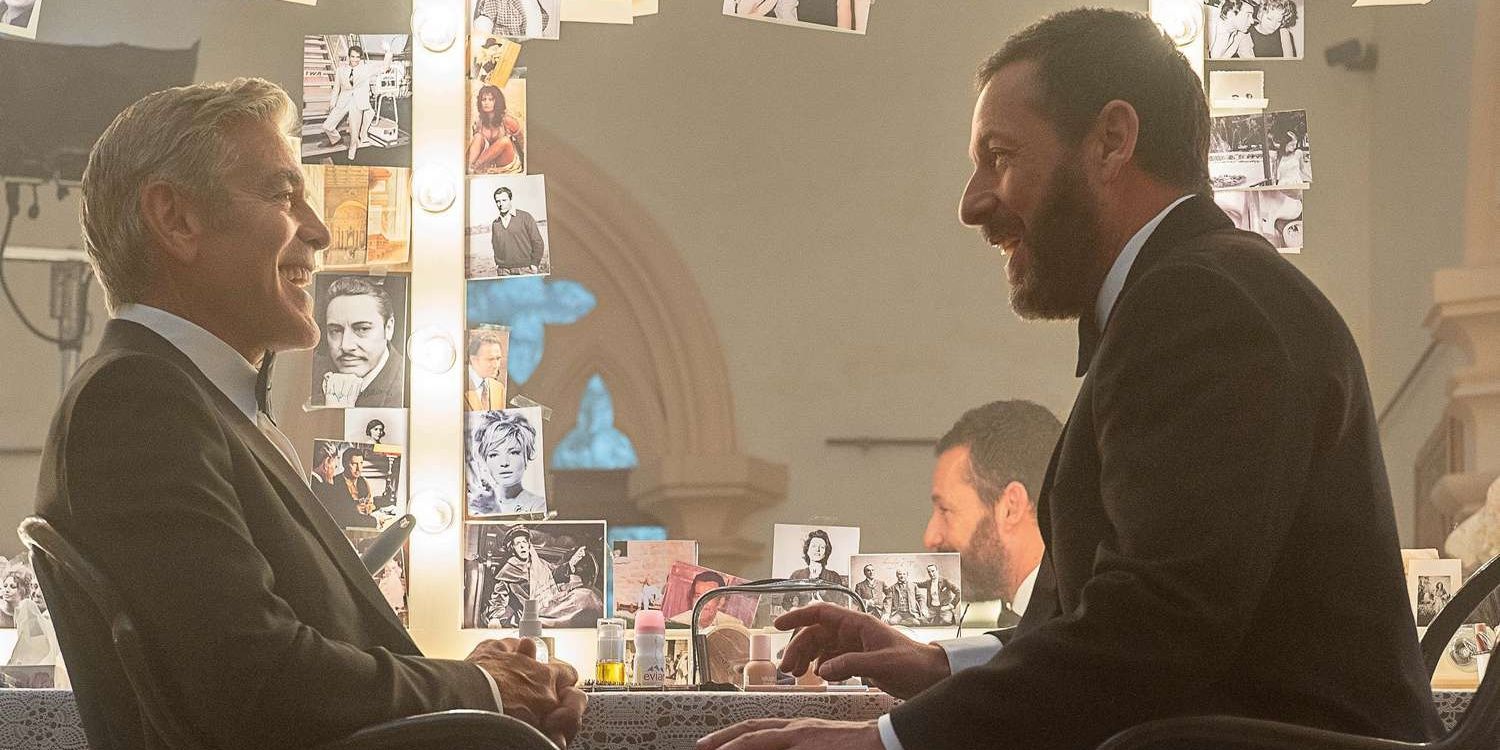
Jay has been wrestling with his demons this entire trip, and I thought the film would end with him trying to make amends for the bad, at best, deplorable, at worst, things he’s done to his friends and his family with what I assumed would be some grand speech while accepting the award.
Nope. Instead, he looks directly into the camera and says, “Can I go again? I’d like another one.”
I honestly laughed out loud when the credits rolled, not because it was funny, but because of how incredulous it all was.
What it actually shows to me is that many celebrities live a life without any real consequence and that it’s actually harmful for them to “do the right thing.” Jay mentions wanting to apologize to Tim but both his lawyer and manager (Adam Sandler, who is brilliant in the film) say that can’t happen. It’s just going to go away.
So he uses leverage that his high-powered team dug up to make his unsightly, cancelable moment just disappear like it never happened. The film also does a great job of showing how stars of that caliber are, in essence, their own cottage industry.
Jay Kelly has a team so vast to tend to everything that entails being a star at that magnitude. In a way, Jay Kelly and stars of that ilk are the sun in their own solar system, in that everything revolves around them, and that’s just the way it is.
George Clooney probably didn’t get into a fight with a former friend outside a bar in Santa Monica, but I’m guessing there’s a skeleton or two in his closet. The film doesn’t exactly come out and say it directly, but it implies that a “scandal” would torpedo him and the cottage industry/solar system revolving around him.
Which brings us to…
What Is Really The Point Of Jay Kelly?

That celebrities are real people too, with thoughts and feelings and crap? That they’re just as conflicted about their mistakes as we are? To show the inner machinations of everything that entails being a celebrity? That we should feel bad for the isolated nature of their world because they’re lonely in their proverbial ivory tower?
OK, sure, but how can anyone relate to that? We can’t relate to Jay Kelly because Jay Kelly and all the real celebrities like him do not truly live in our world and don’t face the consequences of those living in our world. Not really, anyway.
If I beat up a child therapist outside of Chez Jay in Santa Monica, the child therapist would probably press charges, and I’d probably be put in jail, because I don’t have an army of fixers at my disposal who could make it go away.
He could have revealed the toll that stardom took on his life, how he failed as a father, as a husband, and how he did it all purposefully, in pursuit of both attaining and keeping his place among the proverbial stars. But instead, he reveals this privately, keeping his lofty status intact.
But, to steal from Kendrick Lamar, all Jay Kelly really shows is, “They Not Like Us,” and we didn’t need a movie to illustrate that.